
A LEVEL PHOTOGRAPHY
Ready to capture the world through your own lens and build a standout visual portfolio? A Level Photography lets you experiment with everything working with traditional darkroom film to digital software. Whether you’re into fashion photography, street documentary, photojournalism, or experimental imagery, this course lets you explore what inspires you most. You’ll dive into photographing people and places, craft still-life scenes, or create immersive photographic installations, mixing media to produce stand-out imagery and collections that bring your creative vision to life.


Course Overview
This course invites you to look at the world through a critical lens, using light and time as your primary tools to tell compelling visual stories. You will draw inspiration from cinema, photojournalism, fine art, and contemporary digital media, dissecting how iconic image-makers use framing, mood, and genre to communicate meaning. By studying both historic and modern photographic movements, you’ll learn to decode visual culture and channel those insights into your own personal style.
Hands-on experimentation sits at the core of the curriculum. You’ll master both classic and contemporary tools, from traditional film to digital SLR cameras and editing software. By controlling variables like shutter speed, aperture, composition, and digital manipulation, you will document your creative journey through storyboards, contact sheets, and detailed evaluations—ensuring your technical skills always serve your unique artistic vision.
As your projects develop, you’ll shift from capturing raw footage to curating immersive visual experiences for your audience. You will learn the art of editing, sequence building, and fine-tuning print resolutions or digital displays to maximize impact and you will exit the course with a polished portfolio that showcases your distinct voice as a photographer.
Course Content
Year 1
Component One: workshop activities followed by a themed project based mainly on taught elements and developing ideas.
Year 2
Component One (continued): personal investigation. A practical unit of work with a written investigation between 1,000 and 3,000 words.
Component Two: controlled assessment – preparation and final piece. A 15-hour supervised period in which you are expected to fully realise your ideas.
Assessment
Both components are centre assessed and moderated by Eduqas. You will be expected to demonstrate a response to all of the assessment objectives.
Career Pathways: Where Can This Take You?
THE EDITORIAL, COMMERCIAL & LIFESTYLE ROUTE – focuses on brand messaging, narrative & high-end aesthetics
Fashion Photographer: shoot editorial spreads, runway looks and advertising campaigns for clothing brands, magazines and designer labels.
Advertising Photographer: capture high-impact promotional imagery for global brand campaigns, billboards, digital media and product launches.
Wedding Photographer: document luxury events and personal milestones through high-end portraiture, candid reportage and storytelling.
THE MEDIA, JOURNALISM & DOCUMENTARY ROUTE – focuses on truth, visual narrative & rapid storytelling
Photojournalist: cover breaking news, social issues and historical events for international news agencies and digital media.
Photography Editor: curate, licence, assign and polish visual content for major newsrooms, publishing houses and media platforms.
Food Photographer: style and photograph dishes, culinary products and restaurant concepts for cookbooks, menus and advertising campaigns.
THE CINEMATIC & SPECIALIST ROUTE – focuses on advanced technical mastery, environments & moving image
Directory of Photography (DoP): lead the camera and lighting crews on film, television and commercial sets to create the overall visual tone.
Film Unit Stills Specialist: capture high-quality promotional stills, behind-the-scenes content and continuity shots on film and television sets for studio marketing and extra release content.
Underwater Photographer: capture marine life, aquatic environments and specialised underwater commercial shoots using specialised diving gear and waterproof equipment.
Entry Requirements
Minimum 44444 including 4 in GCSE Art. or Photography. You should also have a genuine interest in photography and an enthusiasm for being creative, designing and making quality outcomes.
What Do Our Students Say?
Photography has enabled me to see things differently. I can capture small features hidden in a piece of architecture or nature, for example, that others turn a blind-eye to. That one photograph will last forever and enable it to be remembered. Year 12 A Level Photography opened up so many different directions for me to pursue in the projects assigned, one of these being the ability to play with light and shadow to convey a variety of emotions and atmospheres. If I had the chance to do things differently I definitely would have incorporated more focus on photo-illustration in my work. It is a great way to unleash your creativity and experiment with your photographs and tell a story within them. (Kirsty)
Why Choose Dereham Sixth Form College for Photography?
College Exhibitions
At the end of the year, you will have the opportunity to showcase your exam and coursework pieces to family and friends in our annual Art & Design Exhibition.
View our Digital Exhibitions here.
Specialist Facilities
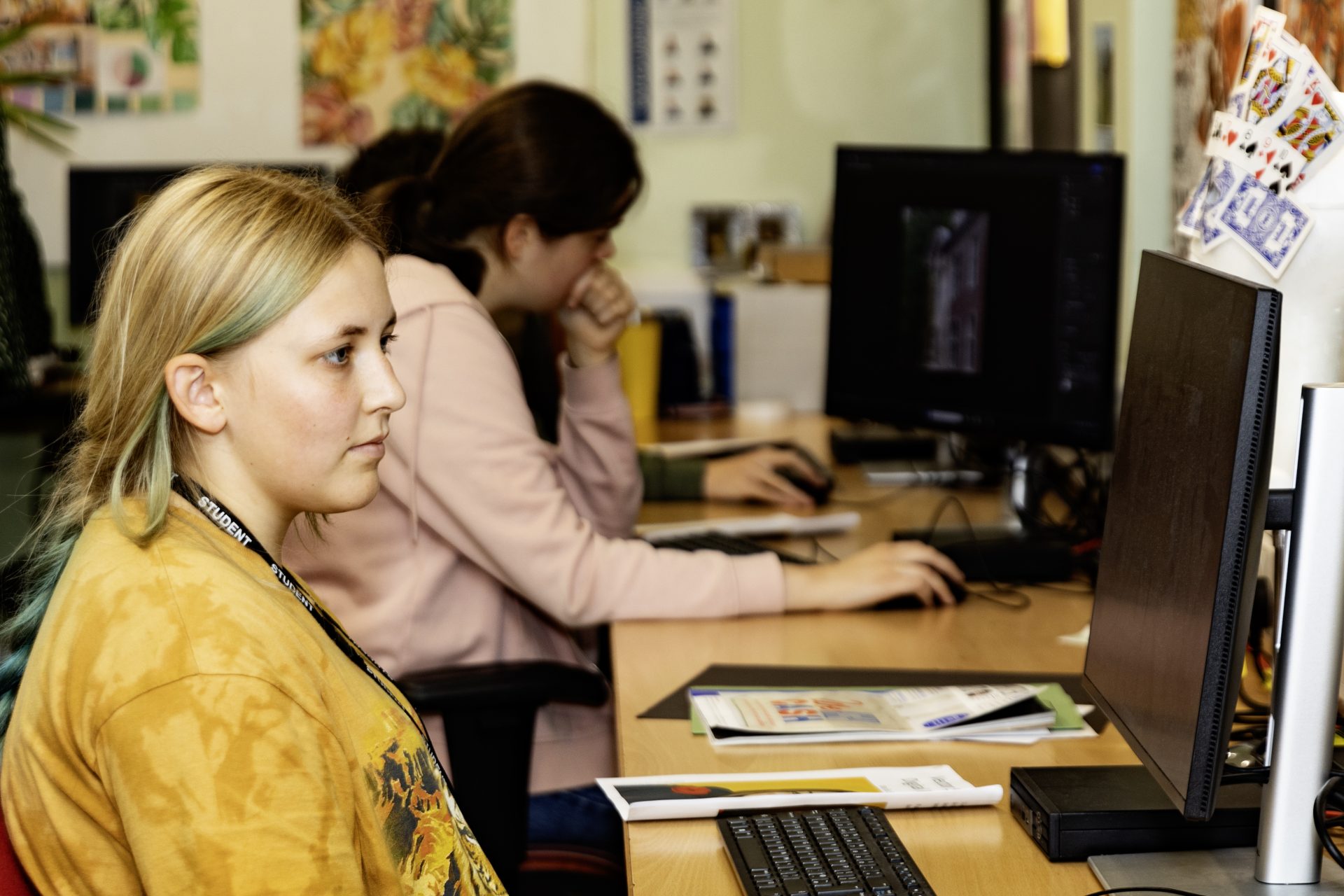
You will have access to art rooms, textile studios, the dark room, workshops with laser cutters and 3D printers, and a suite of PCs, allowing you to experiment with a wide range of materials, tools and techniques.
WJEC Eduqas
All our art and design courses are awarded by WJEC Eduqas, following their
A Level Art and Design specification.
Back to all courses